Freya Ludwig · 29 September 2026
Regional Recovery Signals in Anchor Distribution After Major Domain Shifts
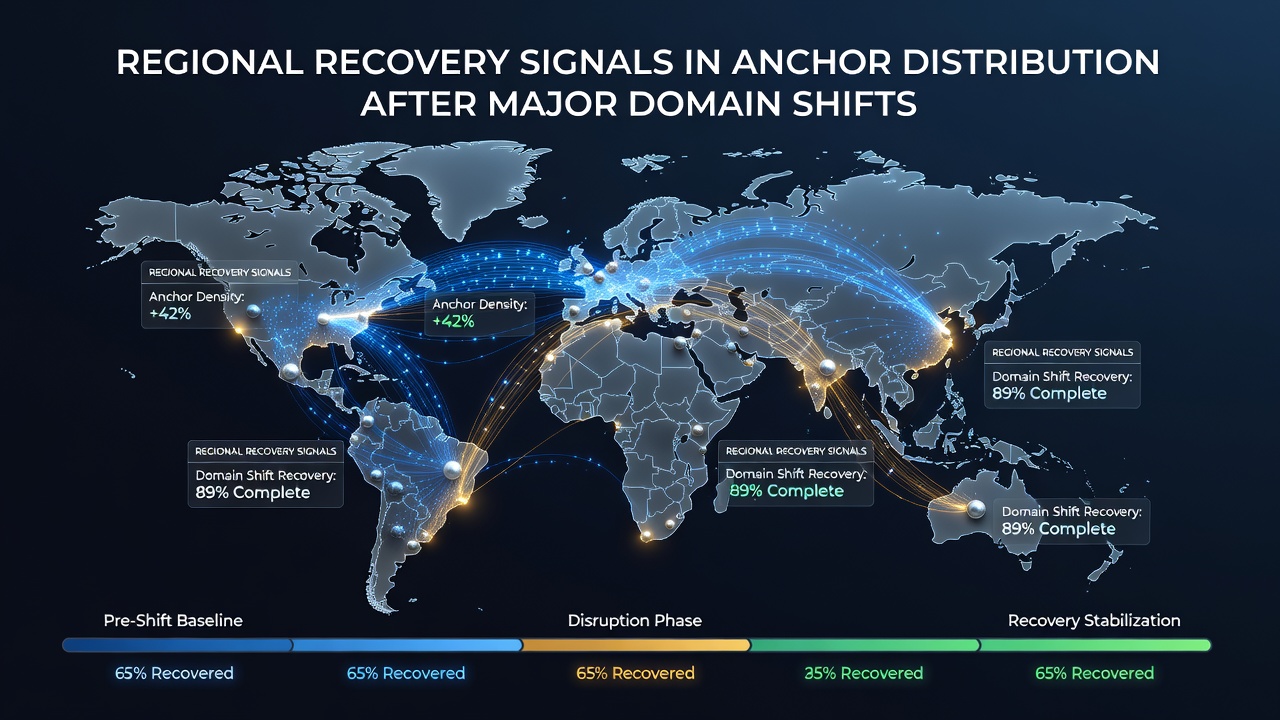
Domain migrations trigger complex shifts in how search engines evaluate and redistribute anchor text signals, and observers note that recovery patterns vary significantly by geographic market because local link ecosystems, language structures, and regulatory environments influence how quickly new domains regain authority through balanced anchor profiles. Researchers tracking these changes have documented that exact-match anchors often decline sharply in the initial weeks after a shift, while branded and partial-match variants begin to reappear at different rates depending on the region involved.
Core Elements of Anchor Distribution Post-Migration
Anchor distribution refers to the mix of text strings used in hyperlinks pointing to a domain, and experts have found that major shifts disrupt this balance because crawlers must reprocess the entire backlink graph before assigning value to the new root domain. Data indicates that diversified anchors recover faster in markets with dense local publishing networks, whereas regions dominated by international directories experience slower stabilization. Those who monitor these metrics often see branded anchors return first since they rely less on exact keyword matches and more on entity recognition across search engine indexes.
Regional Variations in Recovery Timelines
North American markets typically show initial anchor stabilization within eight to twelve weeks after a domain shift, while European and Asia-Pacific regions display extended timelines that stretch beyond sixteen weeks in many documented cases. Studies from academic institutions reveal that language-specific anchor patterns play a substantial role because markets using non-Latin scripts encounter additional processing delays during recrawl cycles. Observers tracking September 2026 data noted that Australian and Canadian domains recovered partial-match anchors at notably higher rates than their counterparts in more fragmented regulatory zones, largely due to stronger local news and directory linkages that accelerated reindexing.
Key Signals That Indicate Stabilization
One clear indicator emerges when the ratio of branded to commercial anchors returns to pre-migration levels within a consistent band across multiple data sources. Analysts have observed that sustained growth in natural anchor diversity, particularly from regional news outlets and industry associations, correlates strongly with improved crawl efficiency and ranking recovery. Figures from various analytics platforms in September 2026 highlighted that domains exhibiting steady increases in long-tail anchor phrases recovered visibility in local search results more rapidly than those relying heavily on exact-match strings during the transition period.
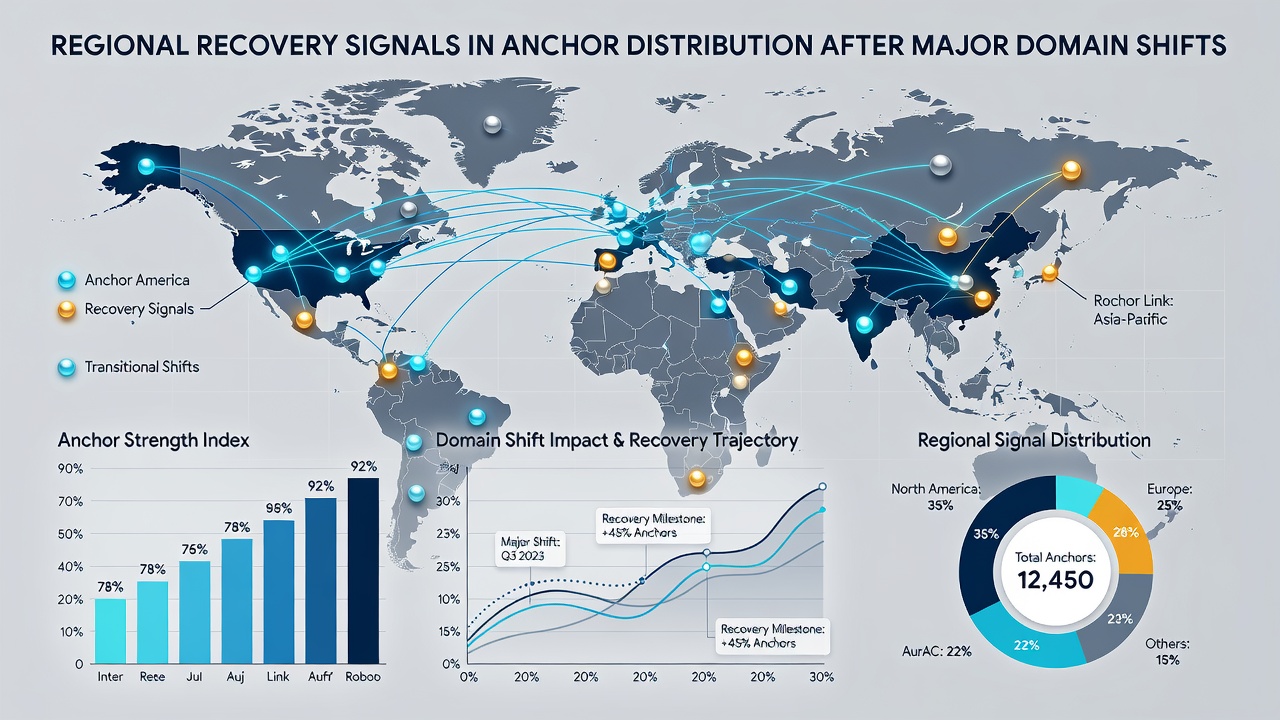
Another measurable signal appears through the gradual rebalancing of follow versus nofollow anchors, since many regional publishers adjust their linking practices after noticing a domain change. Research indicates that markets with active trade associations tend to restore these ratios quicker because established relationships encourage continued linking even after technical migrations occur.
Geographic Influences on Anchor Rebuilding
European data protection frameworks affect how quickly new domains accumulate diverse anchors because consent requirements sometimes limit certain types of data sharing that previously supported link networks. In contrast, markets in North America benefit from denser commercial directory ecosystems that facilitate faster reestablishment of partial-match anchors from trusted local sources. Reports compiled by the European Commission digital initiatives underscore how cross-border linking patterns influence recovery speed in multilingual regions, while separate analyses from North American research centers show that English-language anchors regain equilibrium through high-volume content partnerships more readily than their international equivalents.
Practical Patterns Observed Across Markets
Take one analysis of e-commerce domains that migrated in early 2026 where anchor recovery in the United States outpaced similar shifts in Southeast Asia by nearly five weeks, largely because local review sites maintained consistent linking habits throughout the transition. Another case documented by researchers at Pew Research Center illustrated how educational and governmental domains recovered anchor diversity faster in Canada due to established institutional linking protocols that remained stable despite the domain change. These examples demonstrate that regional publishing density and institutional trust networks serve as primary drivers behind the pace at which anchor profiles normalize after major shifts.
Conclusion
Regional recovery in anchor distribution after domain shifts depends on a combination of local link ecosystems, language characteristics, and institutional linking practices that collectively determine how quickly balanced profiles reemerge. Data collected through September 2026 continues to show that markets with strong regional publisher networks and diverse anchor sources achieve stabilization ahead of those operating in more fragmented environments. Organizations monitoring these signals can track branded anchor ratios, long-tail phrase growth, and follow-to-nofollow balance to gauge progress without relying on any single metric. The patterns observed across different geographies confirm that recovery remains a distributed process shaped by both technical recrawl dynamics and the underlying structure of regional web ecosystems.