Freya Ludwig · 27 October 2026
Video Content's Influence on Dwell Time and Interaction Rates Among Regional Audiences
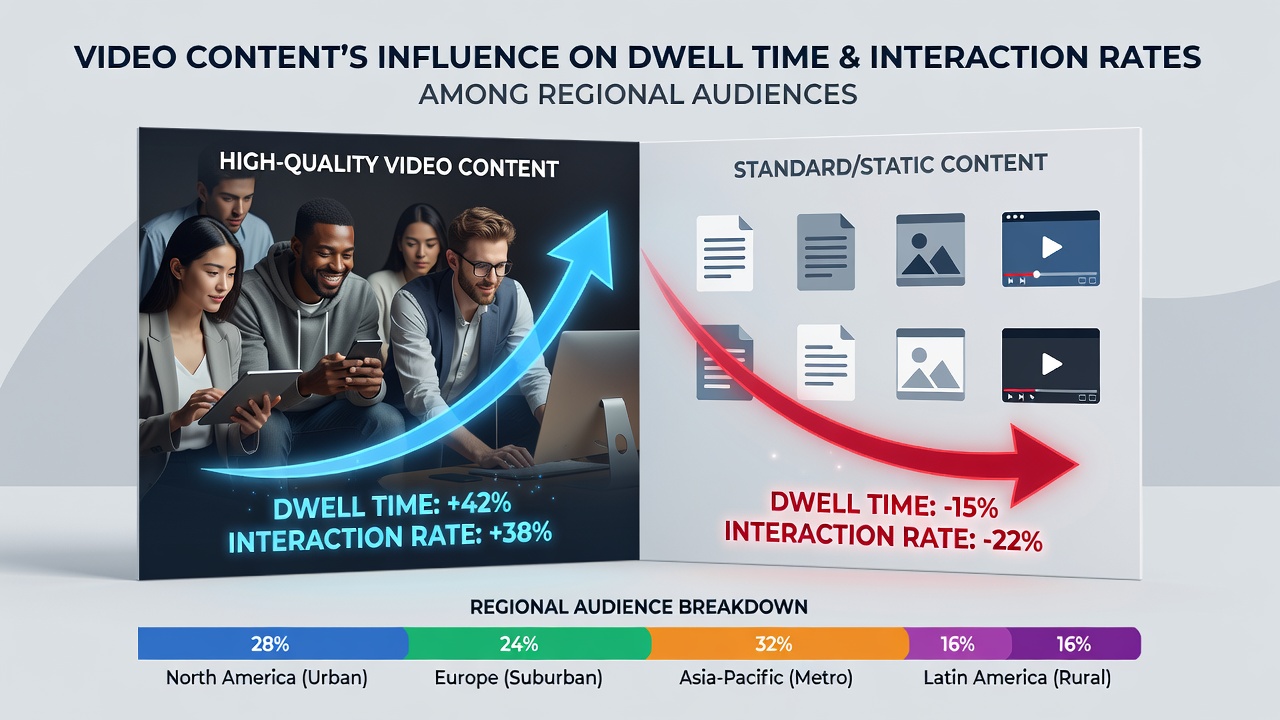
Video content shapes how audiences spend time on digital platforms and how they interact with material across different regions, with researchers tracking these patterns through metrics like dwell time and interaction rates that vary by location and cultural context.
Defining Key Metrics in Video Engagement
Dwell time measures the duration users remain on a page or within an application after encountering video material, while interaction rates track actions such as comments, shares, likes, and clicks that follow video exposure. Data from multiple studies shows these two elements often rise together when video appears in content feeds, yet the strength of that connection differs by region because of variations in internet infrastructure, device preferences, and content consumption habits.
Analysts at research institutions have compiled figures that link longer video sequences to extended session lengths, particularly in markets where mobile data costs remain low and high-speed connections support seamless playback. In contrast, regions with intermittent connectivity see shorter dwell periods even when video content is present, since buffering issues prompt users to move elsewhere quickly.
Regional Patterns in Dwell Time
North American audiences demonstrate consistent increases in dwell time when videos exceed two minutes and include localized references, according to aggregated platform data released in October 2026. European markets reveal similar trends but with sharper spikes during evening hours, when viewers settle into longer viewing sessions on desktop devices rather than mobile ones. Asian regions, especially those with dense urban populations, register elevated dwell times for short-form clips that loop automatically, a pattern tied to commuting habits and frequent micro-breaks throughout the day.
Observers note that Latin American data sets collected over the past year indicate dwell time grows most when videos incorporate regional dialects and music cues, while Australian reports highlight steadier engagement across both long and short formats because of widespread fiber-optic availability. These differences emerge clearly when researchers compare time-on-page statistics across matched content samples delivered to separate geographic cohorts.
Interaction Rates and Their Drivers
Interaction rates climb when video prompts appear at natural pauses within the footage, prompting viewers to respond in real time through on-screen overlays or post-video prompts. Studies compiled by academic groups in Canada show that interactive elements such as polls embedded in videos lift comment volume by measurable margins in bilingual provinces, whereas similar features produce smaller lifts in monolingual markets where language barriers slow response times.

Platform logs from October 2026 indicate that share rates in Southeast Asian countries exceed those recorded in Northern Europe for identical video themes, a disparity researchers attribute partly to denser social network usage and partly to cultural norms around content redistribution. Click-through rates on calls to action also vary, with higher figures appearing in regions that favor transactional video formats over purely narrative ones.
Influences of Platform Algorithms and Infrastructure
Algorithmic recommendations that prioritize video length and completion rates directly affect both dwell time and subsequent interactions, since users who finish a clip receive additional related suggestions that extend their session. Infrastructure quality plays a parallel role, with regions boasting widespread 5G coverage registering faster load times and therefore higher completion percentages that feed into interaction opportunities. Government statistical agencies in Australia have published infrastructure reports that correlate broadband penetration levels with average video session durations, revealing clear gradients between urban and rural cohorts within the same country.
Those who study cross-border data flows point out that language localization features further modulate these outcomes, because subtitles and dubbed audio reduce drop-off rates in non-native markets and allow interaction prompts to reach wider segments of regional audiences.
Comparative Data Across Markets
Comparative analyses published by international research bodies demonstrate that dwell time averages in urban East Asian centers surpass those measured in rural North American zones by noticeable margins when video content matches local trending topics. Interaction rates follow a parallel but not identical curve, with comment density peaking in markets that host active discussion forums tied to the hosting platform. European Union statistical summaries released in late 2026 underscore the role of privacy regulations in shaping interaction patterns, since consent requirements sometimes delay or limit the collection of engagement signals that feed algorithmic recommendations.
One study from a Canadian university tracked user cohorts across three continents and found that video autoplay settings produce divergent dwell outcomes depending on default data-saving modes common in each region. These findings align with broader platform telemetry that shows completion rates as a leading predictor of downstream interactions such as profile visits or follow actions.
Conclusion
Video content continues to exert measurable influence on dwell time and interaction rates among regional audiences, with patterns shaped by infrastructure, cultural preferences, algorithmic design, and localization practices. Data collected through October 2026 confirms that these effects appear consistently across multiple markets yet manifest differently depending on the specific combination of device access, connectivity, and content relevance that each region presents. Researchers tracking these variables expect further refinement of regional models as new platform features and network upgrades roll out in coming periods.